
Fire and Explosion Protection
Securing high-risk industrial processes
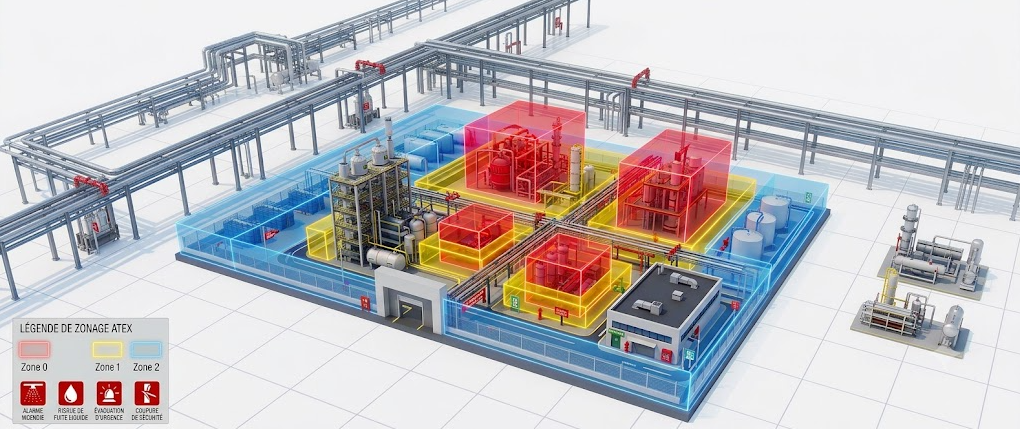
We support industrial actors in the identification, assessment and control of fire and explosion risks linked to complex industrial processes.
The evolution of technologies, particularly in the sectors of lithium-ion batteries, waste-to-energy and recycling, generates new challenges in terms of industrial safety. A thorough understanding of thermal, chemical and mechanical phenomena is essential to design safe, compliant and resilient installations.
Our expertise combines process engineering, risk analysis, industrial equipment design and protection of installations exposed to fires, explosions, thermal runaways and dangerous atmospheres.
Our Areas of Intervention
Manufacturing and recycling of lithium-ion batteries
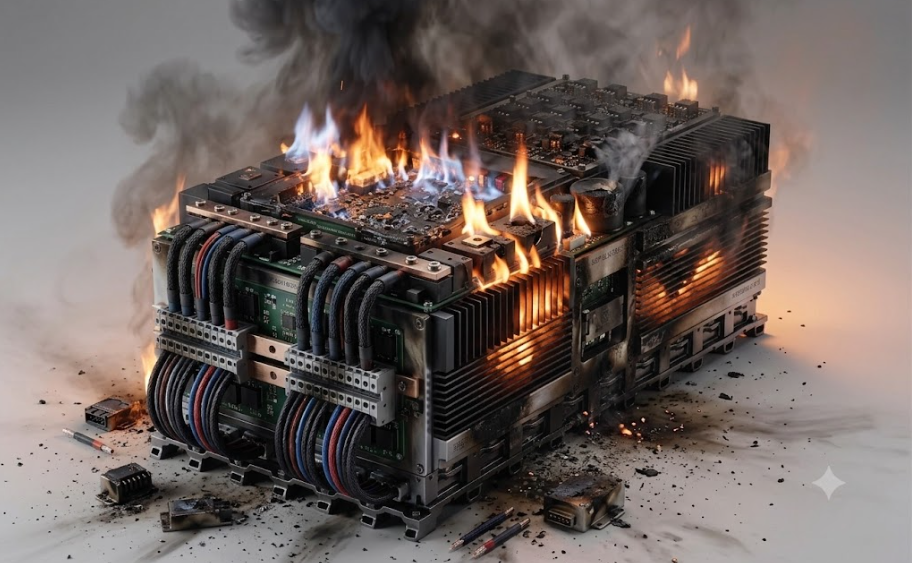
Battery manufacturing and recycling plants face specific risks:
- Thermal Runaway
- Cell and module fires
- Toxic and flammable gas emissions
- Metal dust explosions
- Risks associated with solvents and electrolytes
- Fire propagation between production and storage equipment
Our interventions
- Analysis of fire and explosion scenarios
- Process safety studies
- Design of prevention and protection measures
- Securing storage and production areas
- Evaluation of containment and extraction systems
- Support for gigafactories and recycling projects
Incineration of household waste
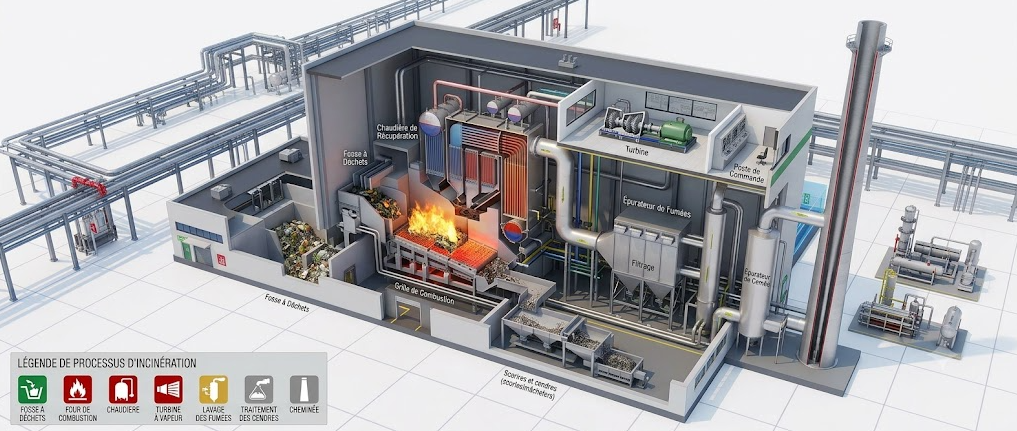
Waste-to-energy installations present risks linked to:
- The presence of heterogeneous combustible materials
- Fire outbreaks in storage pits
- Gas or aerosol explosions
- Incidents in handling systems
- Risks linked to thermal equipment
Areas of expertise
- Analysis of combustion and propagation risks
- Securing waste pits and bunkers
- Protection of conveyors and handling equipment
- Evaluation of detection and extinguishing devices
- Optimization of the safety of ovens and boilers
Hazardous waste treatment
Facilities processing chemical, industrial or toxic waste are exposed to complex phenomena:
- Uncontrolled chemical reactions
- Incompatible product fires
- Explosive atmospheres
- Corrosion and degradation of equipment
- Accidental emissions of dangerous substances
Our services
- Risk analysis
- Accident scenario studies
- Definition of safety barriers
- Assessment of critical equipment
- Assistance with facility design
Automated sorting and recycling centers
The increasing automation of sorting centers improves performance but also introduces new risks:
- Fires caused by batteries in waste streams
- Fire outbreaks on conveyors
- Combustible dust explosions
- Risks related to automated and robotic equipment
Specific expertise
- Analysis of fire propagation risks
- Early detection of lithium-ion batteries
- Protection of automated lines
- Compartmentalization and smoke extraction studies
- Optimization of fire protection systems
Our services
Risk analysis
- Fire studies
- Explosion studies
- Hazard assessment
- Identification of accidental scenarios
Protection engineering
- Definition of prevention measures
- Passive and active protection
- Fire compartmentation
- Detection and extinguishing systems
Technical expertise
- Industrial safety audit
- Diagnosis of existing installations
- Incident analysis and lessons learned
- Owner’s representation and engineering design management (Assistance & Project Management)
Applied Standards and Regulations: Ensuring Global Compliance
Fire and explosion protection leaves no room for guesswork. Our studies, audits, and engineering designs rely strictly on the most rigorous international, European, and national standards to ensure the regulatory compliance of your installations and the protection of your assets.
🇪🇺 European Standards (CEN) & ATEX Directives
- EN 3 series: Mandatory European standard for the design, manufacture, performance and testing of portable fire extinguishers.
- EN 54 series: Mandatory standards governing Fire Detection and Alarm Systems (SDI/SMSI), from the sensitivity of detectors to control units.
- EN 671 series: Standard governing fixed fire-fighting installations.
- EN 12845: Reference standard for the calculation, sizing, installation and maintenance of automatic sprinkler systems.
- ATEX directives (2014/34/EU): Zoning of explosive atmospheres (gas and dust), equipment suitability (CE / Ex marking) and drafting of the DRPCE (Document Relating to Protection Against Explosions).
- EN 60079 series: State-of-the-art rules for the classification of hazardous locations and protection modes for electrical/non-electrical equipment in Ex zones.
🇺🇸 International Standards & Insurance Guidelines (NFPA & FM Global)
- NFPA 70 (National Electrical Code – NEC): Absolute global standard for safe electrical design and installation, including equipment and cabling in hazardous locations (Hazardous Locations).
- NFPA 30 (Flammable and Combustible Liquids Code): Fundamental code for the safe storage, handling and use of flammable and combustible liquids.
- NFPA 497: Recommended practice for classifying industrial process areas (gases, vapors, flammable liquids) for safe electrical installations.
- NFPA 13 & 15 / NFPA 68 & 69: Standards for the installation of sprinkler systems, water spray, as well as the sizing of explosion venting and prevention systems.
- NFPA 800 (Battery Safety Code) : New holistic international reference code governing the risks of fire, explosion and thermal runaway (thermal runaway) over the entire life cycle of batteries (manufacturing, transport, storage, recycling and dismantling)
- NFPA 855 (Standard for the Installation of Stationary Energy Storage Systems) : Major international standard dictating safety rules for design, location, thermal runaway detection (thermal runaway) and fire protection of fixed battery energy storage installations (BESS / ESS).
- FM Global Data Sheets: Direct alignment with the requirements of international insurers to minimize risk premiums:
- FM 3-26 (Fire Protection for Nonstorage Occupancies) : Fire protection requirements (sprinklers, detection) dedicated to industrial buildings excluding storage, including manufacturing and process plants and technical premises.
- FM 7-112 (Lithium-Ion Battery Manufacturing and Storage) : Critical safety standard for prevention, thermochemical containment, and suppression in Lithium-Ion battery manufacturing and storage units.
- FM 8-9 (Storage of Class 1, 2, 3, 4 and Plastic Commodities) : Sizing rules for automatic fire suppression systems in logistics warehouses and high-density storage areas.
🇫🇷 French Regulatory Specificities
- ICPE (Classified Installations) regulations: Compliance with prescription orders (flammable liquid sections 4331/4734, warehouses 1510, etc.) and modeling of thermal effects/overpressure.
- Sectoral Ministerial Orders: Strict compliance with national technical requirements set by the supervisory ministries (e.g. specific orders for logistics warehouses in section 1510, orders of September 24, 2020 and June 12, 2025, post-Lubrizol regulations on the storage of combustible products).
- Prefectural Orders (AP) for Authorization or Registration: Systematic consideration of specific requirements imposed by the Prefect of the department (on proposal from DREAL). These decrees set compensatory measures or local requirements that are stricter than national texts (e.g.: increased firefighting water retention volumes, specific partitioning provisions, reinforced isolation distances).
- APSAD standards: Design and compliance of installations according to CNPP rules (e.g.: R1 for the sprinkler, R7 for detection, R12 for water mist).
🇬🇧 British Regulatory Specificities (UK)
- BS 9999 (Code of practice for fire safety in the design, management and use of buildings) : Major British fire safety architectural design standard. It introduces a flexible and modern approach based on the assessment of risk profiles (Risk-based profile), making it possible to optimize emergency exit widths and travel distances based on installed active protection systems (sprinklers, detection, smoke ventilation).
- Building Regulations (Fire safety: Approved Document B): Alignment of building structures and escape routes with UK fire safety regulatory requirements for industrial and commercial buildings.
- DSEAR 2002 (Dangerous Substances and Explosive Atmospheres Regulations) : British transposition of ATEX directives, governing the control of risks linked to dangerous substances and explosions in the workplace.
🇪🇸 Spanish Regulatory Specificities
- RSCIEI (Regulations for Safety Against Incendios in Industrial Estates – RD 2267/2004): The fundamental Spanish code that governs fire safety in all industrial buildings, factories and warehouses. It requires the calculation of the calorific fire load (cargo of fire), defines the configuration of buildings (Type A, B, C depending on their insulation) and dictates the mandatory needs for sprinklers, RIA, and detection.
- CTE DB-SI (Technical Code of Construction – Basic Security Document in Case of Fire) : National technical code applicable to administrative zones, offices, laboratories and premises supporting industrial sites, setting the rules for compartmentalization, fire resistance of structures and evacuation.
- UNE standards (Una Norma Española) : Application of Spanish national versions of European standards (e.g.: UNE-EN 12845 for sprinklers, UNE-EN 54 for detection), harmonized with the RIPCI requirements (Regulations for Fire Protection Installations) for the installation and maintenance of systems.
An integrated approach to industrial security
Our strength lies in the simultaneous understanding of industrial processes, thermal phenomena, equipment and fire and explosion mechanisms.
This comprehensive approach allows us to identify risks at their source and design effective, proportionate, and cost-optimized protection solutions.
Ready to Innovate?
Contact us today to discuss your projects and find out how we can help you.