
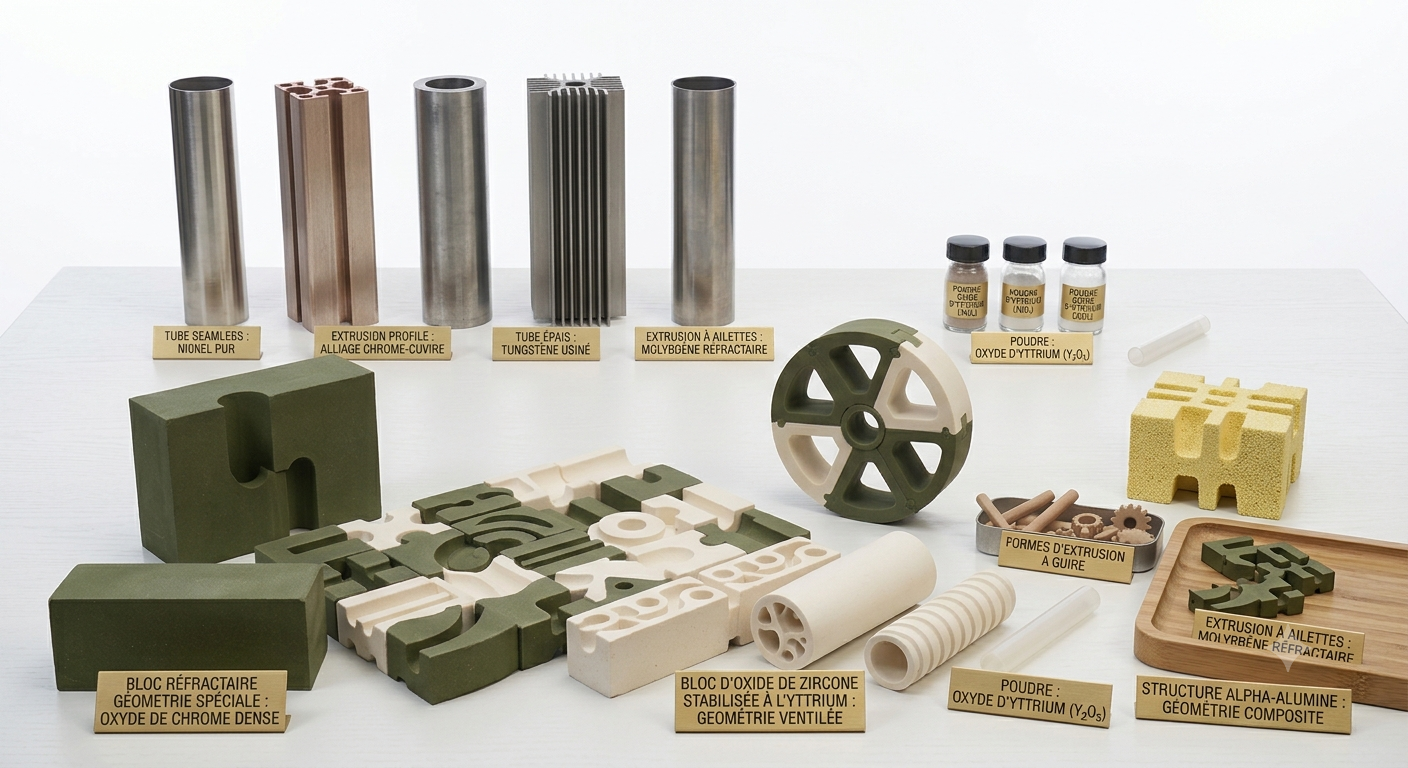
High performance materials
1. High performance refractories
We support industrial actors in the selection, design, optimization and expertise of refractory materials intended for the most demanding thermal processes.
Refractories constitute a strategic element in the performance, safety and durability of industrial installations. Inadequate design or poor choice of materials can lead to unplanned downtime, premature equipment degradation, significant energy losses and increased operating costs.
Thanks to expertise combining materials engineering, thermal processes and industrial equipment design, we offer solutions adapted to the most severe environments.
🎯 Our expert services
Audit and diagnosis
- Facility Inspection
- Failure analysis
- Mapping of critical areas
- Evaluation of remaining life
Refractory materials advice
- Dense refractories
- Insulating refractories
- Refractory concretes
- Alumina products
- Silicon carbide
- Mullite
- Chromite
- Special high performance materials
Design and optimization
- Thermal sizing
- Lining design
- Reduction of energy losses
- Optimization of production campaigns
Technical assistance
- Writing specifications
- Analysis of supplier offers
- Site monitoring
- Reception and quality control
2. Refractory Metals Engineering: Performance beyond 1000°C
Where conventional steels and standard superalloys reach their structural limits, the optimization of cutting-edge thermal processes requires absolute control of refractory metals (Molybdenum, Tungsten, Tantalum, Niobium) and advanced nickel-based alloys.
Our expertise covers the deployment of these strategic materials within ultra-harsh industrial environments (vacuum furnaces, reactive atmospheres, ultra-high vacuum).
🚀 My Areas of Action
- Selection & High Temperature Metallurgy: Choice of the optimal metal or alloy based on temperature constraints (up to 2000°C+), the desired thermal conductivity and resistance to creep (slow deformation under stress).
- Design of Complex Thermal Architectures: Multi-physics sizing and CFD simulation of critical internal components: heating elements (suspended resistors), multi-layer shielding screens and structural suspensions for industrial furnaces.
- Control of Physico-Chemical Risks: Precise evaluation of high temperature interactions (carburization, catastrophic oxidation, embrittlement) to guarantee the purity of processes and maximize the lifespan of assets.
🎯 Key Industrial Applications
- Semiconductors & Photovoltaics: Internal components for low pressure chemical vapor deposition (LPCVD/PECVD) equipment.
- Nuclear of the Future & Aerospace: Structural elements and sintering devices for 4th generation nuclear fuels or environments subject to high radiation and heat flux.
- Automotive & Heavy Tools: Robotic gripping tools and furnace components for low-pressure carburizing or high-temperature vacuum brazing lines
3. Industrial successes

🔥 Optimization of Combustion & Durability of Refractory Materials
The Challenge: Premature degradation of the refractory materials of the hazardous waste incineration rotary kiln led to significant operating losses and high recurring maintenance costs.
The Impact: As an expert in refractory materials, I co-led an international multidisciplinary task force. We have improved material selection, detailed engineering, quality control of material implementation and drying, as well as combustion control in daily operation.
The Results: A radical improvement of asset profitability. This standardization of best practices has made it possible to reduce purchasing costs by 20% and of reduce operating losses linked to breakdowns by 30%, generating a direct financial impact of 2 million euros per year for the group.

⚛️ Extreme Engineering: High Temperature Furnace for the Nuclear Power of the Future
The Challenge: As part of the global strategic project Proryv (Rosatom), aiming to manufacture the first nuclear fuel of the type mixed uranium-plutonium nitride (MUPN), the industry was facing unprecedented technological obstacles. The process required continuous sintering at around 2000°C under highly controlled reactive atmospheres. At this extreme temperature, physicochemical reactions destroyed conventional refractory materials, creating multiple technical gray areas (thermal insulation, high temperature electrical insulation, control of gas flows).
The Impact: Through advanced fluid/thermal simulations (CFD), high temperature corrosion tests in the laboratory and close collaboration with the end customer’s research institutes, we rethought the selection of special refractory materials, optimized the architectures of complex heat insulators.
The Results: An undisputed world first. We designed and delivered the only MUPN continuous sintering furnace in the world, allowing us to reach a historic milestone with the successful production of the first 1,000 new generation fuel rods, paving the way for the closed nuclear cycle of the future.
Ready to Innovate?
Contact us today to discuss your projects and find out how we can help you.